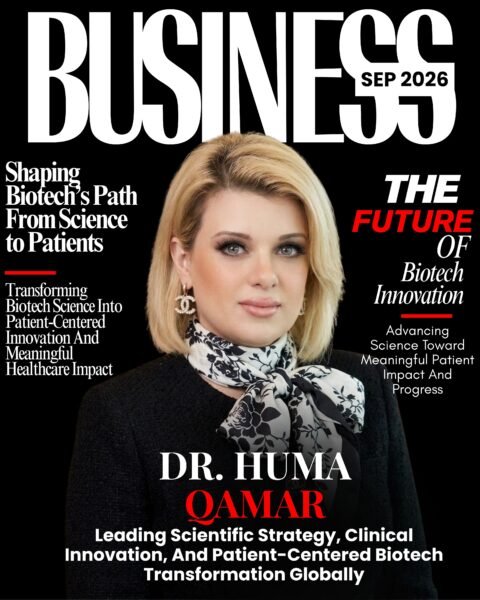
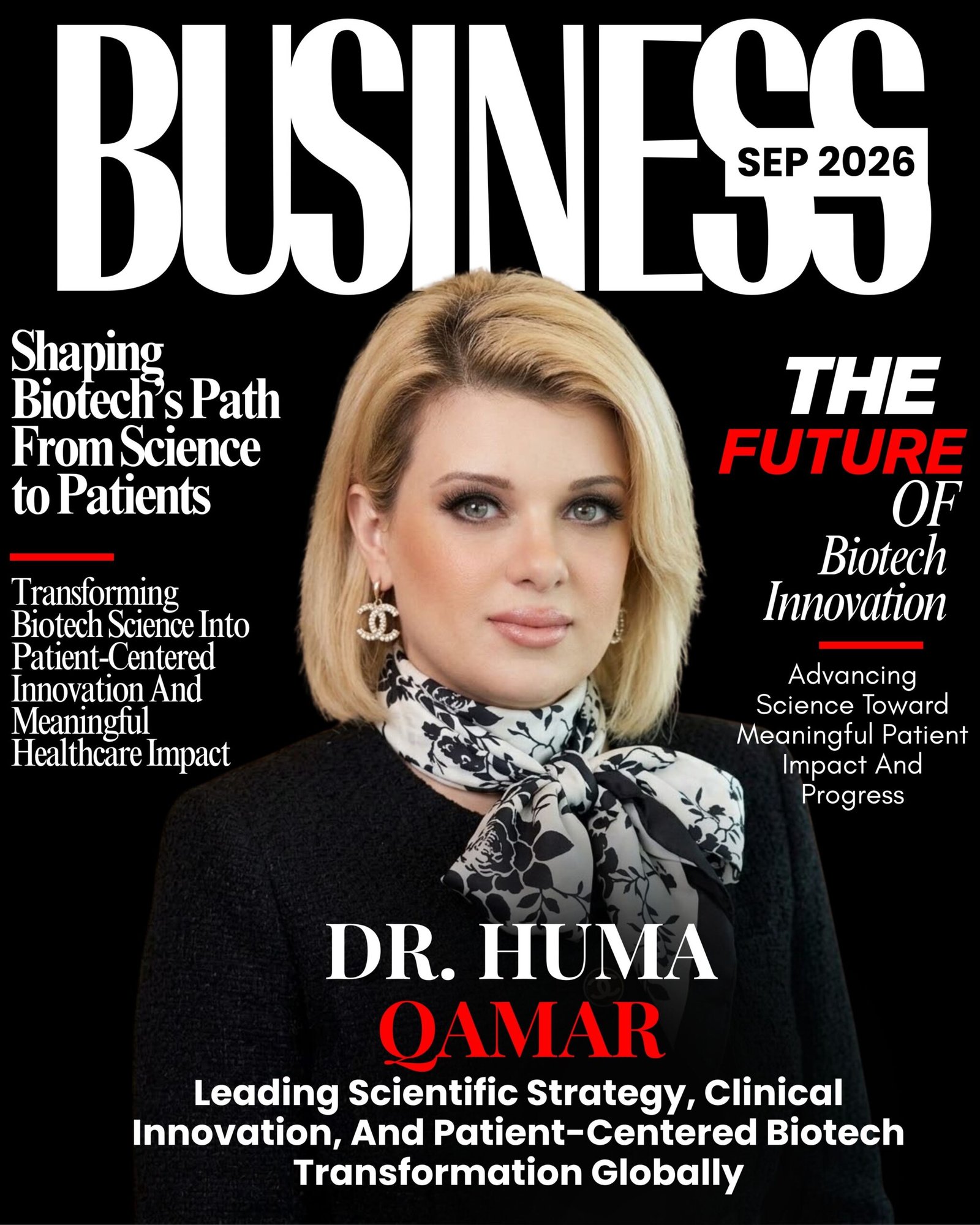
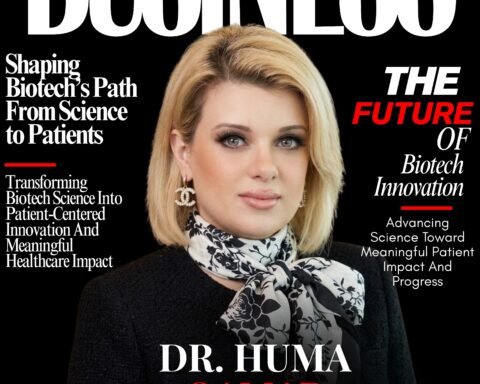
Dr. Huma Qamar learned to lead before she had a title.
Growing up as the eldest child in a single-parent household in Pakistan, she took on responsibility early. She cared for her siblings, worked under high academic expectations and pursued ambitions that were not always encouraged for girls in her conservative surroundings.
The experience shaped a habit that would follow her into medicine, biotech and entrepreneurship: acting without waiting for ideal conditions.
As a clinician, Qamar saw what it meant for families to wait for a diagnosis. Later, working with CAR-T cell therapy in oncology, she encountered a different kind of possibility: using a patient’s own immune system to fight cancer. The experience expanded her view of innovation. It could mean more than adding another drug to a treatment landscape. It could change how a disease is approached.
That realization drew her toward the decisions that shape development: clinical strategy, capital allocation and leadership.
Building the route from science to patients
Across biotech, pharmaceutical companies and academic medical centers, Qamar saw a recurring challenge. Scientific teams might have promising assets, yet lack a clinical, regulatory or business strategy mature enough to guide them toward patients.
In her view, the science was not always the reason a therapy stalled. Often, the route from laboratory research to clinical use had not been clearly mapped.
That gap helped inspire Alma Global Consultants, which Qamar co-founded. The firm works across healthcare, biotechnology, artificial intelligence and business strategy. Its work includes developing clinical and regulatory roadmaps, helping leadership teams assess strategic choices and pressure-testing decisions before significant capital is committed.
The central question, she says, is how a promising scientific idea can become a responsible, realistic and scalable solution for patients.
It is a question that reflects her own experience in drug development. At Ocugen, Qamar learned that breakthrough science is only a starting point. Moving a potential treatment forward requires disciplined execution, transparent communication and trust among regulators, investigators and investors. Her appointment as the company’s Chief Medical Officer was announced in 2024.
For Qamar, each protocol, regulatory conversation and data readout should connect to a larger purpose: bringing a potential treatment closer to people who may have few options.
Strategy with a patient in view
In her role as Chief Medical Officer at Shifa Precision, Qamar describes her priorities as sequencing, rigor and keeping patients in view.
In precision medicine, the order of scientific questions can affect a company’s valuation, available runway and regulatory path. Rigor matters because studies must withstand scrutiny from regulators, clinical experts and investors. And behind each milestone, she says, is a patient waiting for progress.
Working across multiple programs also gives her a broader view of what helps development move forward—and where it can stall. She brings those patterns into decisions about each program.
The challenge is to balance commercial realities with scientific integrity. Qamar does not see them as opposing goals. A durable commercial case, she argues, depends on the truth about a program’s evidence. Shortcuts may create a liability later.
That principle also guides her thinking about AI in drug development. AI may help researchers accelerate discovery, improve patient selection and refine trial and site design. In rare disease, where each data point can matter, those tools could be especially useful. But speed alone is not enough. Human judgment and accountability still matter when decisions affect patients.
“Patients aren’t data points,” she says. Technology can inform decisions, but clinicians must still ask whether the results make sense in context.
Scaling the promise of advanced therapies
Qamar sees a major opportunity in making cell and gene therapies more scalable. CAR-T has demonstrated that biology can be reprogrammed to fight disease. Gene-agnostic platforms could potentially address multiple genetic mutations with one product, while AI may help identify patients and make better use of genomic information.
But scientific possibility does not remove practical obstacles. Manufacturing costs and capacity, questions about durability, reimbursement models and fragmented company strategy can all complicate a therapy’s path to patients.
Some reimbursement systems, she notes, were designed around ongoing treatments rather than one-time therapies. Young companies may also advance a promising asset without having fully planned how it will reach patients.
The organizations that make progress, in her view, will combine strong biology with strategic clarity from the beginning.
That clarity is also central to Alma’s international ambitions. Qamar believes U.S. clinical research expertise could complement that development and help advance partnerships, trials and treatments in areas such as precision medicine, rare disease and next-generation vaccines.
Her role in those partnerships is often to translate: making complex science understandable and actionable for scientists, executives and investors alike.
Leadership that opens doors
Qamar’s international background has shaped how she builds teams. She has often been the only woman or immigrant in a room and has experienced being underestimated because of her accent or background. Those moments influenced her approach to leadership: judge people by their capabilities, understand their strengths and create room for them to contribute.
Her advice to women entering biotechnology and healthcare is to begin before they feel completely ready, and to stay close to the work. Understanding what a protocol delay means for a program, what a clinical site needs and how a milestone affects patients gives leaders the operational depth to speak with authority.
She also encourages women to advocate for themselves and to create opportunities for others as they advance. Qamar mentors women, immigrants and international medical graduates, viewing representation as more than presence. It also means making space for the people who have not yet seen someone like themselves in a senior role.
Looking five years ahead, Qamar wants Alma to demonstrate that integrated, patient-centered strategy can help biotech companies make better decisions sooner. She hopes the firm will become a trusted partner for organizations moving promising science toward patient impact.
Her own measure of success is not a title. It is the doors she has helped open, and whether more therapies reach the communities they were developed to serve.
Post Views: 2,842